Much of Kenyan coffee is produced in more arid regions. As you get a little father away from Mt Kenya, the climate dried up quickly. Kirinyaga is one of the most lush environments in Kenya, quite jungle like and as many know, good rainfall and plenty of shade often makes the tastiest cup.
Growing the coffee is only half the battle to producing stellar coffee. What separates Kenya for most other producing nations is the way it organizes farmers into Farmer Cooperative Societies (FCS), basically every farmer, large or small, is connected to internal infostructure that gives them the support, knowledge and tools to grow the best coffee. These FCS’s are all locally owned, organized and run, letting them adopt to their microclimates and individual needs.
Roast:
Light
Notes:
Bright Fruits, Spice, Cocoa
Lot #:
3819
Origin:
Kirinyaga County
Processing Method:
Washed
Altitude
1500 – 2000 masl
Variety
Batian, Ruiru 11, SL28, SL34
Much of Kenyan coffee is produced in more arid regions. As you get a little father away from Mt Kenya, the climate dried up quickly. Kirinyaga is one of the most lush environments in Kenya, quite jungle like and as many know, good rainfall and plenty of shade often makes the tastiest cup.
Growing the coffee is only half the battle to producing stellar coffee. What separates Kenya for most other producing nations is the way it organizes farmers into Farmer Cooperative Societies (FCS), basically every farmer, large or small, is connected to internal infostructure that gives them the support, knowledge and tools to grow the best coffee. These FCS’s are all locally owned, organized and run, letting them adopt to their microclimates and individual needs.
Roast:
Light
Notes:
Bright Fruits, Spice, Cocoa
Lot #:
3819
Origin:
Kirinyaga County
Processing Method:
Washed
Altitude
1500 – 2000 masl
Variety
Batian, Ruiru 11, SL28, SL34
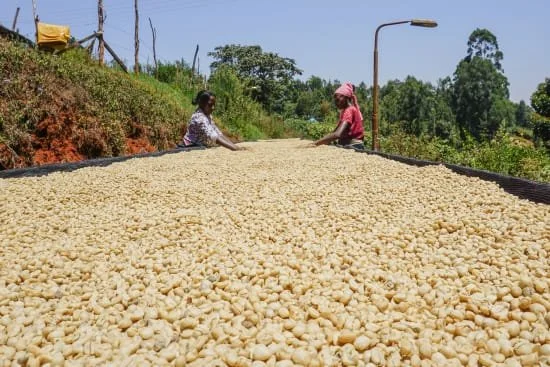 Image 1 of 6
 Image 2 of 6
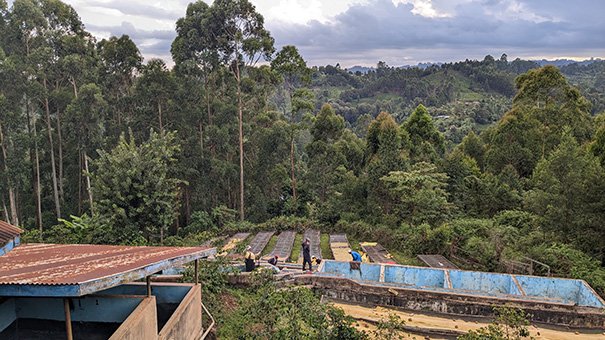 Image 3 of 6
 Image 4 of 6
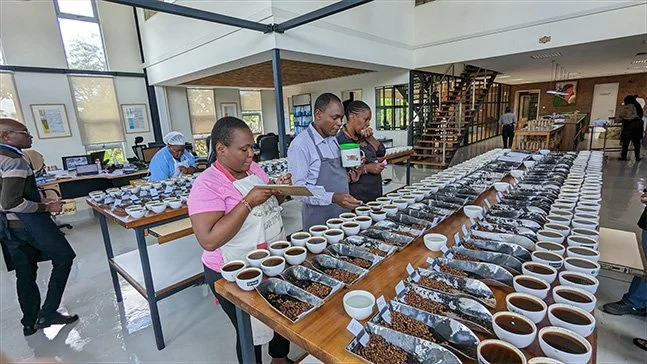 Image 5 of 6
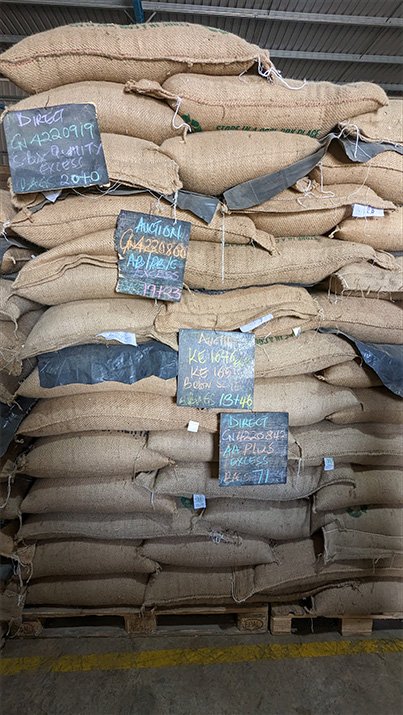 Image 6 of 6